
The wastewater lift station in the municipality is old. The pumps are at the final stage of their life and the controls are inefficient and the access hatch has worn out. The concrete wet well is sturdy and solid.
Should the entire station demolished and rebuilt? Not necessarily. It is important to inquire if the system in place can support modern pumps without compromising future capacity, reliability, or maintenance accessibility.
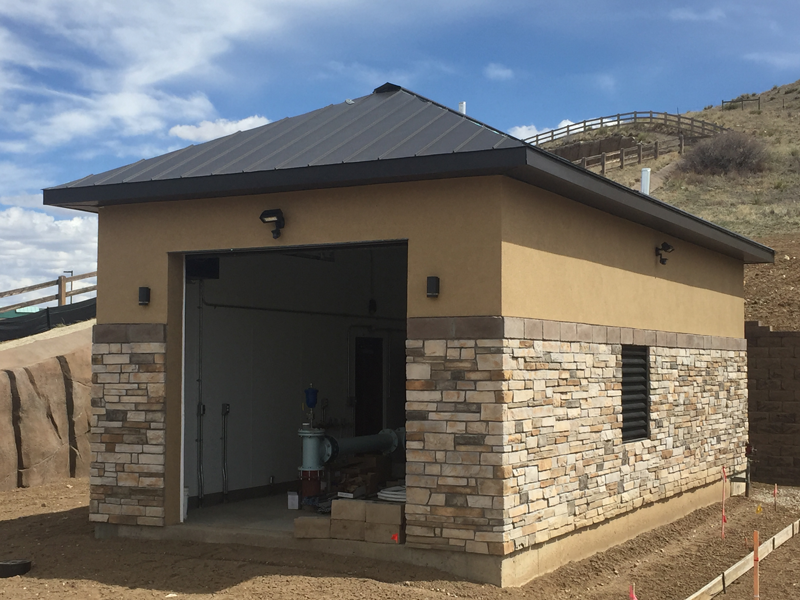
Image credit: romtecutilities.com
The retrofitting of the pumping station carefully designed can save valuable infrastructure and also replace components no longer meeting operational requirements.
Begin with the structure no one wants to replace
It’s costly and inconvenient to replace the wet well since it is submerged in the ground, linked to pipes and essential for the collection of wastewater.
Retaining a concrete construction that is functional can reduce the excavation and construction.
The degradation of the area close to the access hatch could complicate this decision. Romtec Utilities has identified wet-well hatch replacement as a crucial retrofit. It might be more reliable to replace the top layer instead of installing a brand new hatch onto deteriorated concrete. This technique can be utilized to improve access and the usability of the structure without the need to replace the entire wet well.
A Powerful Pump Changes the Engineering
Suppose a residential neighborhood has grown substantially since its original lift station was installed. The pumps that are in place may not be sufficient for the increasing flow of wastewater.
A pumping station upgrade could involve higher-horsepower pumps, but equipment selection cannot happen independently of the surrounding system.
Engineers must also evaluate the hydraulic requirements of the system, including the flow rate and the total dynamic head. Installing a larger pump before evaluating the conditions could cause more problems than it solves. Planning for future expansion during initial design will enable you to build in the future.
Make sure that the wastewater is moving during construction.
Retrofitting a wastewater pumping station has its own unique challenges, that is not encountered in other construction projects. The station could need to be operational while construction is underway.
When contractors aren’t busy, wastewater continues to arrive. Based on the nature of the project temporary bypass pumps could be needed to maintain services during removal and the installation of existing equipment.
Romtec Utilities was able to address this kind of challenge in the Federal Law Enforcement Training Center in Brunswick, Georgia.
The project involved replacing two wastewater lift stations that were in poor condition while also maintaining the operation of the facility. The project was able adapt to existing station footprints as well operating requirements using local-specific engineering and system for replacement that is packaged. The scenario illustrates the importance of focusing on construction sequencing before the construction process starts.
When replacement becomes the better Choice
Some stations are not suitable for rehabilitation. A seriously degraded wet well structure that is not strong enough, or significant changes to the hydraulic requirements can make the sewer lift station replacement more suitable than altering the current installation.
The decision should account for structural integrity, equipment compatibility accessibility to construction, service continuity, and long-term operating needs. Romtec Utilities begins retrofit and replacement projects by determining which elements will remain and which require replacement.
The company can then design engineering solutions that are specific to the location, including preliminary designs as well as budget estimations. Prefabricated components can also help organize installation and reduce some needs for construction on site.
The Project Isn’t Complete until the Pumps are Set to Start
Modern lift stations need to be operated as a system in one. Before returning it to normal service, it is necessary to start testing and commissioning helps ensure that the pumps, controls, as well as the equipment that is associated with them, are in accordance to the design approved.
Manuals for operation and maintenance and also instruction for operators are vital. Maintenance workers must be aware of the new equipment, operating procedure, and documents before they can assume responsibility for the station.
Retrofitting successfully preserves structures that are still useful and addresses the shortcomings which led to the need for modernization.
Municipalities and owners of facilities must consider more than immediate repairs. The best projects incorporate the latest equipment in existing structures and continue to provide essential services while construction is underway. They also prepare the pumping system so that it can continue operation for many years.